Thursday, March 27, 2014

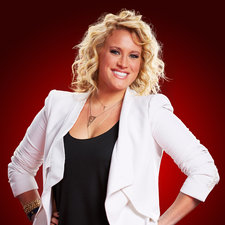
Marist College Alumna Dani Moz ('09, COM/PR) Starring on The Voice

Industry analysts have attributed the success of NBC's popular TV series, "The Voice," to the show's innovative social marketing "storytelling" approach. Read more about this at http://ow.ly/v46s3

But speaking of stories, did you know about Marist College's connection with The Voice? 

Danielle Mozeleski (Dani Moz)
Yes, Marist alumna Danielle Mozeleski (Marist College, '09, Communication/Public Relations) is currently battling her way through the show as Dani Moz, a member of Team Shakira. 

Danielle was a student of mine in public relations courses at Marist, and even then she exhibited the qualities that would help her achieve early success in life after college.

Read this story about how Dani Moz turned her public relations career into a spot on one of America's most popular television shows. And watch the March 17 battle round between Dani Moz and DeShawn Washington on The Voice.

Go Red Foxes!

Wednesday, March 5, 2014

Father of IMC Don Schultz to Speak at Marist

Marist College will present the "father of integrated marketing" at its second IMC Speaker Series event of the year on Friday, March 7, from 1:30 to 3:30 p.m. Medill School Emeritus-in-Service Professor of Integrated Marketing Communication (IMC) Dr. Don Schultz will speak about the past, present, and future of IMC.

Medill School at Northwestern University is credited with introducing the first graduate program in IMC, and Dr. Schultz was one of the chief architects of Medill's program. He is also known around the world for his vast industry, consulting, and teaching experience in IMC.

Seating is limited for this event on campus, so Dr. Schultz’s presentation will be streamed live on the Web. To attend and participate in the event via live stream, click the following link just before the program begins or during the program: http://www.livestream.com/maristmedia.

Marist will also provide a link to a video recording of Dr. Schultz’s presentation after the event. Like Marist's MA in IMC Facebook page to obtain more information about the availability of the recording and follow other news about Marist's master's program in IMC offered by the School of Communication and the Arts.


Friday, January 31, 2014

Social Media: "A Culture of Encounter"

Need guidance about social media etiquette? How about using modern communication technology to promote personal connections? In case you missed it, read the transcript or listen to a recording of the Vatican address released on January 24, 2014, by Pope Francis, head of the Roman Catholic Church.

World Communications Day

In an address that marked the Catholic Church's 2014 World Communications Day, Pope Francis promoted what he and the Pontifical Council on Social Communications described as a “culture of encounter.” He called on followers to make greater and more ethical use of social media to unify members of the human race and help the less fortunate. According to Pope Francis:
Today we are living in a world which is growing ever “smaller” and where, as a result, it would seem to be easier for all of us to be neighbours. Developments in travel and communications technology are bringing us closer together and making us more connected, even as globalization makes us increasingly interdependent.
He also added:
We need to resolve our differences through forms of dialogue which help us grow in understanding and mutual respect…. Media can help us greatly in this, especially nowadays, when the networks of human communication have made unprecedented advances. The internet, in particular, offers immense possibilities for encounter and solidarity. This is something truly good, a gift from God.
Rewards and Risks of Social Media

While praising the power of social media, Pope Francis also issued a warning about the dangers of unethical communication.
Communication is really about realizing that we are all human beings, children of God. I like seeing this power of communication as “neighbourliness.” 
Whenever communication is primarily aimed at promoting consumption or manipulating others, we are dealing with a form of violent aggression.
To guard against the risks of social media and realize the full potential of mass communication, Pope Francis advocated for a compassionate use of technology and a realization of outcomes that achieve human connections, not just digital connections.
It is not enough to be passersby on the digital highways, simply “connected”; connections need to grow into true encounters. We cannot live apart, closed in on ourselves. We need to love and to be loved. We need tenderness. Media strategies do not ensure beauty, goodness and truth in communication. The world of media also has to be concerned with humanity, it too is called to show tenderness. The digital world can be an environment rich in humanity; a network not of wires but of people.
The Challenge of the Communication Revolution

In closing, the Bishop of Rome noted the revolution currently taking place in communication technology, and called on everyone to face the challenge of communicating in our social media world with renewed energy.
The revolution taking place in communications media and in information technologies represents a great and thrilling challenge; may we respond to that challenge with fresh energy and imagination as we seek to share with others the beauty of God.


Read more about the Vatican’s policies on social media on the home page of the Pontifical Council for Social Communications


Tuesday, December 10, 2013

Best Practices in Social Media for 2013


Thanks to our UK colleagues in the Chartered Institute of Public Relations (CIPR) for their 2013 social media best practices guide. This free 30-page document is chock full of wisdom on the following topics:
  • definition of social media
  • dos and don'ts of social media
  • planning social media
  • legal considerations
  • security considerations
  • advice for employers
  • social media measurement 
Here is a snippet from their section on social media "dos":
  • Listen
  • Understand
  • Plan
  • Engage in conversation
  • Disclose relationships when endorsing a product, client, organization
  • Be honest about how manages social media channels
  • Determine the content approval process from the beginning
  • Be transparent
  • Be respectful
The CIPR report is a must read for anyone who studies or practices social media management.

And no, I'm not "endorsing" the CIPR. I'm just a fan of their latest best practices guide and would like to recommend it to others.

You can download a copy from CIPR's Slideshare account.


Wednesday, May 22, 2013

Content Marketing and PR Thinking Will Dominate

The Paris, France, bureau of PRNewswire published on Tuesday (May 21) an article by Publicis Groupe that contained very interesting data from a survey about social media and digital marketing.

The survey of 2,000 European marketing students conducted by the MediaSchool Group was titled “Next Generation of Marcoms.” Maurice Lévy, the chairman and CEO of Publicis Groupe, described the data as “fascinating” and added that the survey results should serve as a warning to avoid becoming complacent about social media and digital communication.

Here are some of the key findings from the survey:

  • More than 80% of students surveyed thought agencies that focus entirely on social media and digital marketing will disappear within 10 years – believing social media will turn into a communication channel for all marketers. 
  • 70% believed that content marketing and public relations thinking will soon dominate the marketing field. 
  • Corporate social responsibility will become increasingly important. 86% of students surveyed want to work for organizations that place as much value on doing work that contributes to social good as creating a profitable brand image. 
  • The most important social media channel, according to the students? Facebook. 
  • The most admired communication campaign of the last year? Red Bull Stratos. 
Read the PRNewswire story at http://ow.ly/li4jy
Obtain a .pdf copy of the survey’s full report at http://www.mediaschool.eu/NextGeneration.pdf

Publicis Groupe [Euronext Paris FR0000130577, CAC 40] is one of the world's leading communications groups. We offer the full range of services and skills: digital (DigitasLBi, Razorfish, Rosetta, VivaKi), creative services (BBH, Leo Burnett, Publicis Worldwide, Saatchi & Saatchi), public affairs, corporate communications and events (MSLGROUP), media strategy, planning and buying (Starcom MediaVest Group and ZenithOptimedia) and healthcare communications, with Publicis Healthcare Communications Group (PHCG). Present in 108 countries, the Groupe employs 58,000 professionals.

The MediaSchool Group (MSG) is one of Europe's foremost business schools specializing in the marketing communications. For more than 30 years it has taught advertising, marketing, design, PR, journalism and more recently digital communications in faculties in France, Belgium, the UK and Spain. Graduates from the MSG work in management positions in marketing agencies and in-house positions around the world.

Friday, May 10, 2013

Dealing With Primary and Secondary Sources and Self-Plagiarism in APA Style


Students often ask me how to distinguish between primary and secondary sources, and how to cite each, when writing an academic paper in American Psychological Association (APA) style. The concepts of primary and secondary sources are often misunderstood or confused by students.

This can lead to a deduction of points for non-compliance APA style, since the Publication Manual of the American Psychological Association (2010) encourages use of primary (original) sources of information and discourages use of secondary sources and citations. According to the manual, "Use secondary sources sparingly, for instance, if the original work is out of print, unavailable through usual sources, or not available in English" (p. 178)

Students also ask how to cite their own work (e.g., a paper completed in a previous course). This is a very important question. Students who are not aware of the need to cite their previous work may be be susceptible to allegations of self-plagiarism, which the APA publication manual (2010) has described as "the practice of presenting one's own previously published work as though it were new" (p. 170). Read these tips to avoid the pitfall of self-plagiarism.

I am using this blog post to provide my response to common questions about primary and secondary sources and self-plagiarism, along with supporting material from the APA publication manual. Feel free to pass along this guidance.

NOTES:
1. Keep in mind, the American Psychological Association and its publications are the only primary (original) sources of information about APA style. I support the guidance I provide in this blog post with quotes, attributions, and citations taken from my direct observations of APA sources. Hence, for me, all material in this blog represents my original work or work that I have drawn from primary sources.
2. Also keep in mind, you as a reader of this blog are one-step removed from the original source of a direct quote, attribution, or citation that I have published in this blog; and you are reading my interpretation or reproduction of the original source. Therefore, if you base your work or interpretation of APA style on any direct quotes or citations of another author's work in my blog post you are using secondary sources, since you are not reading the original source. I encourage you to use my citations to locate an original source of material and base your interpretations and scholarly work on your direct observation of the primary source.
Question 1: In our course textbook, the author used an interesting quote from another author. Can I use that quote in my paper?

There is no black and white answer to this question. The APA publication manual recommends that you use a primary (original) source of information when you cite material in your work and the manual discourages you from using a secondary source (e.g., work by one author that is cited by another author). However, you may "use secondary sources sparingly, for instance, if the original work is out of print, unavailable through usual sources, or not available in English" (APA, p. 178). Here is how to distinguish between primary and secondary sources.
Primary source. If you or one of your paper's coauthors directly observed (read) the original source of the work that you quote, paraphrase, cite, or reference then you citing a primary source. The key here is that you directly observe the source that you are citing (e.g., work by the author of a textbook). You may include this primary source (textbook) material in your work with proper attribution or citation.
Secondary source. A secondary source is one step removed from the original source. For instance, the original work of your textbook's author is a primary source since you are observing the original source of that material (e.g., the textbook). However, the quote from another source published in that textbook is, for you the reader of the textbook, a secondary source. Since you are not reading directly the original source of that quote, attribution, reference, or citation you are depending on the textbook's author to reproduce and interpret the quoted material accurately. To ensure the accuracy of the citation and understand the context of the quote or attribution you should use the textbook author's reference list to find the original source of that material and read it directly.
Examples: In the APA publication manual's (2010) Introduction section, the editors wrote,
The Publication Manual of the American Psychological Association was first published in 1929 as a seven-page "standard of procedure, to which exceptions would doubtless be necessary, but to which reference might be made in cases of doubt. (Bentley at al., 1929, p. 57)
In-Text citation of a primary source. Let's say you want to use and cite the editors' statement of fact about the publication date of the original APA manual. Since you were able to make a direct observation of this material, it becomes a primary source for your paper: "The Publication Manual of the American Psychological Association was first published in 1929" (APA, 2010, p. 3). Use the standard APA format for a reference list citation (see the example following Question 2, below.)
Now let's say that you want to use in your paper the current APA manual editors' quote from Bentley et al. (1929). The quote is a secondary source for you, since you are one-step removed from the original Bentley et al. source. You have not read the original Bentley et al. source; therefore, you are depending on the APA editors as intermediaries to reproduce and interpret the original source for you.
In-text citation of a secondary source. The APA publication manual discourages you from using or citing this secondary source. Try to find the original source, the Bentley et al. manual, read it directly, and then quote and cite it as a primary source. If you can't find the original source, you would then cite the secondary source of the Bentley quote in the APA publication manual as follows:
The original APA style manual was described by Bentley (1929) as a "standard of procedure, to which exceptions would doubtless be necessary, but to which reference might be made in cases of doubt" (as cited in American Psychological Association, 2010, p. 3).
However, since you did not read the Bentley source directly, you cite it only in text. In the reference list, you cite the source that you did read, the APA manual, but not the secondary source, Bentley, which you did not read directly. 
Question 2. Can I use material in this assignment that comes from a paper I have previously written in another course; and if so do I cite my previous paper as a primary or secondary source?

As author or co-author of your own paper, you may cite your paper as an original, primary source -- as long as you refer directly to your own material.

If you are a Marist College student, you are required to follow academic integrity policy before submitting work submitted in one course for credit in another course: "An arrangement by which work is to be submitted for credit in two or more courses must have the prior approval of the instructors involved" (see http://www.marist.edu/academics/advise/acad.html).

If you receive permission to use your previously published material, your citation would look something like this in your new paper:

Examples:
In-Text Citation from From Your Previous Work as a Primary Source:
According to Bason, Berman, Logue, Thompson, and Williams (2013), "Marist is a leader in the field of communication" (p. 2). 
Reference List Citation from Your Previous Work as a Primary Source:
Bason, M., Berman, S., Logue, M., Thompson, M., &   Williams, M. (2013). My Marist portal: Bringing a community together. Unpublished manuscript, Department of Communication, Marist College, Poughkeepsie, NY.
NOTES:
1. See the APA publication manual, Article 7.09, p. 221-212, for the reference list style of an unpublished paper from an academic institution.
2. If you wish to cite another source of course material that is not widely available (an e-mail or message to a limited distribution, a post in a discussion forum, a handout given only to students in the course, a telephone call, lecture notes, etc.) you should use the citation format for personal communication. See the APA publication manual, Article 6.19, p. 179, and the example, below:
Examples:
In-Text Citation for Personal Communication:
According to Van Dyke (personal communication, May 10, 2013), "If you wish to cite another source of course material that is not widely available ... you should use the citation format for personal communication.
or
When citing information that is not widely available, "you should use the citation format for personal communication." (M. A. Van Dyke, personal communication, May 9, 2013)
P.S. Also note the single space between the initials M. and A. The APA manual calls for one space after a period or other punctuation marks (except for a few rare exceptions). This includes an author's initials in text or reference list citations (e.g., M. A. Van Dyke, not M.A. Van Dyke), in page number citations (e.g., p. 3, not p.3), etc.
Reference List Citation for Personal Communication: According to the APA Style Manual, "Because they do not provide recoverable data, personal communications are not included in the reference list. Cite personal communications in text only" (p. 179). In other words, add to your reference list only sources of information that other readers or authors could find in a library, an online source, etc. In the case of a course paper that is not widely available or recoverable, you could use a personal communication citation when referencing its contents. Whether or not the paper is widely circulated or recoverable is a judgment call on the part of the author. However, if you are writing a new paper and wish to cite material from another source that you cited in your research paper (e.g., a direct quote), your research paper becomes a secondary source of that material -- since it is one step removed from the original source.
Since you directly observed that information when you cited it in your research paper, simply go back to the original source and quote it directly as a primary source. If you cannot find the original source and want to use your research report as the source of material, you would use a secondary citation style:

Examples:
In-Text Citation from Your Previous Work as a Secondary Source:
Rust (2005) stated that at the university level, faculty members who are in the middle of their careers can either be “allies or stubborn opponents as their institutions adjust to competitive pressures, revise programs to meet the needs of increasingly diverse students, and integrate new educational technologies" (as cited in M. Bason et al., 2013, p. 5).
NOTE: Only use the abbreviation et al. after your first citation, in which you list all authors.

Monday, May 6, 2013

How a Crisis Can Change Organizational Culture and Communication Strategy


How does a crisis change the management culture of an organization and lead it to adopt a strategy of integrated communication led by a senior leader? Use this link to listen to an audio podcast of a special online Marist College School of Communication & the Arts M.A. speaker event presented on May 1, 2013.

In this one-hour podcast, Ms. Kathy Geiger, deputy assistant director for community, education, government, and public affairs at Brookhaven National Laboratory (BNL), Long Island, N.Y., speaks about managing organizational culture and integrating communications during a crisis.

In 1989, the U.S. Environmental Protection Agency placed BNL on its National Priorities List because of problems associated with historical chemical and waste-management practices and onsite soil and groundwater contamination. In 1996 and 1997, plumes of volatile compounds and groundwater contaminated with tritium were discovered off the BNL site.

These events led to immediate and intense public outrage, which developed into sustained, active involvement by members of the surrounding communities, activist groups, elected officials, and government agencies. This series of crises, along with a sharp erosion of publics’ trust in BNL, also led Lab leaders to plan a dramatic change in the Lab’s management and communication culture.

This change has resulted in:

- a commitment from senior leaders to a two-way, integrated communication strategy that seeks to maintain public trust.

- the hiring of a senior communication manager who has a direct role in the Lab’s strategic decision making process and access to the Lab’s senior leaders.

- the allocation of resources and implementation of a communication assessment program to support excellence in communication.

Use this link to read more background about this topic.

In her current position, Ms. Geiger is responsible for developing, integrating, implementing, and assessing strategic internal and external communications along with engagement plans and programs to advance the Lab’s scientific mission. She also manages the Lab’s emergency public information program and oversees community relations, media and communications, and issues management programs. Ms. Geiger has served at Brookhaven National Laboratory for more than 20 years.

She previously worked as an editorial researcher for Newsday, a prominent daily newspaper on Long Island, N.Y.; and as a reference services librarian for the Lindenhurst Public Library in Lindenhurst, N.Y. She holds a B.A. in English from Dowling College.

Brookhaven National Laboratory is a U.S. Department of Energy laboratory founded in 1947. It is situated on 5,300 acres in the Pine Barrens of Suffolk County on Long Island, N.Y. The Laboratory’s mission is to create, operate, and make available major facilities to university, industrial, and government personnel for basic and applied research. This research extends to physics, chemistry, materials science, biology, medicine, and other scientific fields. The Laboratory has more 3,000 employees who support more than 4,000 scientists who visit Brookhaven’s large and unique facilities to conduct research each year.

This event was scheduled and organized by students and faculty in COMG 503 Media Relations, a course in Marist’s M.A. in Communication program. The event was also open to students in Marist’s M.A. in IMC program. This audio podcast is provided for anyone who was unable to attend the event.


View Larger Map Brookhaven National Laboratory